Norfolk’s urban fabric has always been shaped by water. From the rebuilding after the great fires of the 1800s to the modern expansion of the Naval Station, construction here contends with a shallow water table and soft estuarine deposits that would make any geotechnical engineer pay attention. When a new mixed-use project breaks ground near the Elizabeth River or a stormwater infrastructure upgrade is planned in Ghent, understanding what lies beneath isn’t just routine protocol—it’s the difference between a foundation that lasts and one that fights the ground for decades. CPT testing cuts through the guesswork by delivering continuous, real-time resistance profiles that map the transitions between loose fill, compressible clay, and the denser Pleistocene sands that Norfolk builders rely on for bearing. A well-executed cone penetration program in this coastal environment provides the stratigraphic certainty that traditional SPT borings sometimes miss, especially where tidal fluctuations influence pore pressure readings.
Continuous CPT logs in Norfolk’s coastal soils provide a level of stratigraphic detail that no interval-based method can match, especially where tidal groundwater confuses standard readings.
How we work
Local ground factors
In Norfolk, we often see foundation designs that lean too heavily on borings spaced 50 or 60 feet apart, assuming the soil profile is uniform between points. That assumption can be risky here. The city sits on a coastal plain where buried stream channels, old marsh deposits, and inconsistent historic fill create abrupt lateral changes across a single lot. A CPT rig can traverse a site in a tighter grid pattern, quickly flagging a soft pocket where a conventional boring log would have interpolated competent material. One overlooked compressible lens under a corner column can trigger differential settlement that shows up as drywall cracks within two years. The cost of a supplementary cone penetration survey pales next to the price of underpinning a settled structure. If your project involves a stormwater basin or a retaining wall along a tidal creek, the pore pressure data from a CPT also helps verify whether the soil will drain during rapid drawdown scenarios—a detail that Norfolk’s frequent nor’easters make far more relevant than inland designers might expect.
Explanatory video
Regulatory framework
ASTM D5778 – Standard Test Method for Electronic Friction Cone and Piezocone Penetration Testing of Soils, ASCE 7 – Minimum Design Loads and Associated Criteria for Buildings and Other Structures, IBC (International Building Code) – Geotechnical investigation requirements per Chapter 18
Related services
Standard CPT Soundings
Electric cone penetrometer pushed at a constant rate, recording qc and fs continuously. Ideal for mapping stratigraphy and estimating bearing capacity under shallow footings.
Piezocone (CPTu) Testing
CPT cone equipped with a pore pressure transducer. Measures excess pore pressure generation and dissipation rates, critical for assessing consolidation behavior in Norfolk’s soft clays.
Seismic CPT (SCPT)
Adds a geophone to the cone string to capture shear wave velocity at depth. Used for liquefaction assessment and dynamic site response analysis in seismic-prone Tidewater areas.
CPT Data Interpretation & Reporting
Processed logs with soil behavior type charts (Robertson 1990), corrected cone resistance, and derived parameters including undrained shear strength and relative density.
Typical parameters
Quick answers
How much does a CPT test typically cost in Norfolk?
For most sites in the Norfolk area, CPT testing ranges from approximately US$160 to US$260 per sounding, depending on depth, rig access, and whether piezocone or seismic modules are required. A shallow standard sounding on open ground falls toward the lower end, while a deeper CPTu profile with dissipation tests in a congested downtown lot moves toward the upper end. We always provide a per-site quote after reviewing the planned depth and the number of soundings.
What makes CPT different from standard SPT borings?
The cone penetration test pushes an instrumented cone into the ground at a steady rate, recording tip resistance and sleeve friction continuously—typically every 2 centimeters. Standard SPT borings, by contrast, sample at 5-foot intervals and can miss thin, weak layers. CPT also measures pore pressure in real time, which is particularly useful in Norfolk where the water table is high and tidal fluctuations affect in-situ stress conditions.
Can CPT data be used to estimate foundation settlement?
Absolutely. By applying established correlations—such as those from Robertson or Lunne—we convert net cone resistance into constrained modulus values for each soil layer. These moduli feed directly into one-dimensional settlement calculations. In Norfolk’s layered profile of sand and compressible clay, a continuous CPT log provides far more resolution than interval-based sampling for estimating both magnitude and rate of consolidation settlement.
Do you need special access arrangements for the CPT rig in Norfolk neighborhoods?
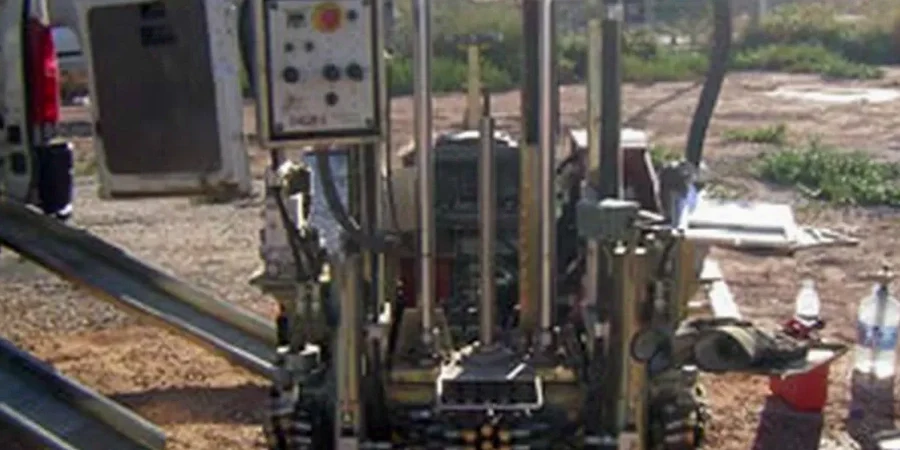
Our CPT rig is track-mounted and can access most residential lots, narrow easements, and commercial job sites without extensive clearing. However, if you’re in a historic district like Freemason or working near mature tree canopies with overhead restrictions, we may recommend a smaller push system or coordinate with a local arborist. We handle utility locating and any city right-of-way permits before mobilization. More info.