With an average elevation barely above 10 feet and a history shaped by the Chesapeake Bay, Norfolk’s subsurface is a direct reflection of its coastal plain origins. The city sits atop interbedded sands, silts, and soft clays deposited over millennia, conditions that demand precise geotechnical characterization before any structural load touches the ground. A CPT test can provide continuous stratigraphic profiling, but when disturbed sampling and direct strength correlation are needed, the Standard Penetration Test remains the benchmark. Our accredited laboratory executes SPT borings across Norfolk—from the historic Ghent district to the developing waterfront near the Elizabeth River—delivering N-value data that engineers rely on for shallow and deep foundation design under the prevailing IBC and ASCE 7 provisions.
In Norfolk’s tidally influenced groundwater regime, SPT N-values corrected for overburden and energy ratio are the foundation of any reliable bearing capacity calculation.
How we work
Local ground factors
A recurring mistake in Norfolk is assuming that SPT refusal at shallow depth indicates competent bearing strata without verifying the cause. In the city’s older sections, buried concrete debris, timber piles from demolished wharves, or dense shell hash layers can produce misleadingly high blow counts. Engineers who skip borehole advancement verification risk designing foundations on a thin, discontinuous hard layer overlying very soft, compressible clay. This scenario has led to differential settlement in structures near the Lafayette River, where post-construction investigation revealed the true weak layer only feet below the refusal point. A proper SPT program logs the drilling action, notes auger resistance, and correlates refusal depths with local geologic maps to distinguish between a reliable bearing layer and an obstruction artifact.
Regulatory framework
ASTM D1586 – Standard Test Method for Standard Penetration Test (SPT) and Split-Barrel Sampling of Soils, ASTM D2487 – Standard Practice for Classification of Soils for Engineering Purposes (Unified Soil Classification System), IBC 2021 – International Building Code, Chapter 18 (Soils and Foundations), ASCE 7-22 – Minimum Design Loads and Associated Criteria for Buildings and Other Structures
Related services
SPT Drilling and N-Value Measurement
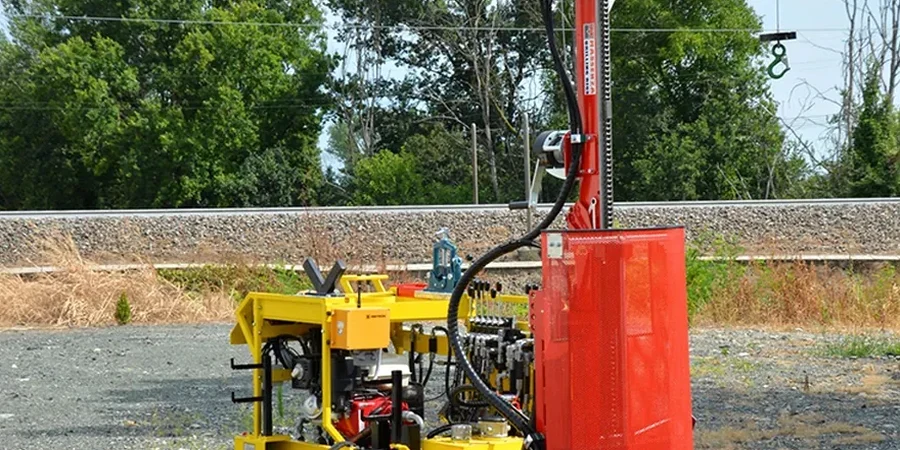
Mobilization of track-mounted or limited-access drill rigs to perform SPT borings at 5-foot intervals or at stratum changes. We record raw N-values and apply corrections for overburden pressure, hammer energy ratio, and borehole diameter in accordance with ASTM D1586 and local practice for the Atlantic Coastal Plain.
Soil Classification and Engineering Properties
Integration of SPT data with laboratory index testing—moisture content, grain size distribution, and Atterberg limits—to assign USCS group symbols. We provide correlations for drained friction angle in sands and undrained shear strength in clays, enabling direct input into bearing capacity and settlement analyses.
Typical parameters
Quick answers
How much does an SPT boring cost in Norfolk?
For projects in the Norfolk area, a typical SPT boring to 30 feet depth ranges between US$470 and US$800, depending on access conditions, the number of split-spoon samples required, and whether hollow-stem augers or mud rotary methods are needed to stabilize the hole through soft organic soils.
What is the difference between SPT and CPT for Norfolk sites?
The SPT recovers a disturbed soil sample for visual classification and laboratory testing, while the CPT provides continuous tip resistance and sleeve friction profiles without sampling. In Norfolk’s interlayered coastal sediments, we often recommend SPT when index testing is critical for design, or a combination of both when a detailed stratigraphic profile with soil properties is required.
How do you correct SPT N-values for the energy delivered by the hammer?
We measure the hammer energy ratio using instrumented rods during calibration and apply a correction factor CE to the raw N-value. For a safety hammer typically used in our Norfolk operations, CE ranges from 0.60 to 0.80. The corrected N60 value is then further adjusted for overburden pressure and rod length as specified in ASTM D1586 and common practice manuals such as the FHWA Geotechnical Engineering Circular No. 5.
At what depth do you perform SPT sampling?
Standard practice is to perform SPT sampling at 5-foot depth intervals and at every significant change in soil type detected during drilling. For critical bearing strata evaluation in Norfolk, we may reduce the interval to 2.5 feet near the anticipated foundation bearing depth to capture thin layers that could control settlement behavior.
Can SPT data be used to evaluate liquefaction potential in Norfolk?
Yes, SPT N-values are a primary input for simplified liquefaction triggering procedures based on the Seed-Idriss framework and subsequent updates. Given Norfolk’s shallow groundwater and the presence of loose sands in the geologic section, we routinely perform liquefaction screening using corrected SPT data following the methods outlined in the NCEER/NSF workshops and ASCE 7-22 Section 11.8.